

Articles similaires


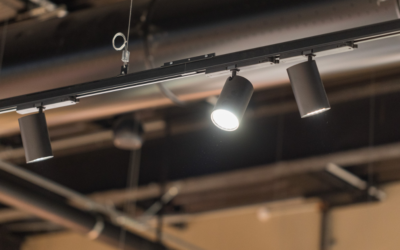
In a building, lighting requirements change depending on operating hours, occupancy, activities and different times of the day.
However, many installations still operate uniformly, with the same lighting level everywhere and at all times.
Smart lighting makes it possible to adapt light automatically to actual use: providing the right level of light, in the right place and at the right time, while optimising energy consumption.
With this in mind, TRATO developed CONNECT, its smart lighting solution designed to control luminaires according to occupancy, predefined scenarios and the actual needs of the building.
What is smart lighting?
Smart lighting is a system capable of automatically adjusting light levels according to occupancy, operating hours, predefined scenarios or conditions detected in the environment.
Unlike traditional lighting operating at a fixed level, it allows light to change according to actual needs and avoids keeping a little-used or unoccupied area illuminated at the same level as an occupied space.
Why adapt lighting to the actual occupancy?
Not all areas of a building are used in the same way or at the same time.
In a store, for example, lighting requirements can vary between preparation before opening, customer opening hours and night-time operation. In a commercial or office building, some areas may also remain unoccupied for part of the day.
With CONNECT, luminaires can automatically adjust their lighting level according to presence detected in their immediate environment. Light can therefore be increased where activity requires it and reduced when an area is less frequently used.
How does the TRATO CONNECT solution work?
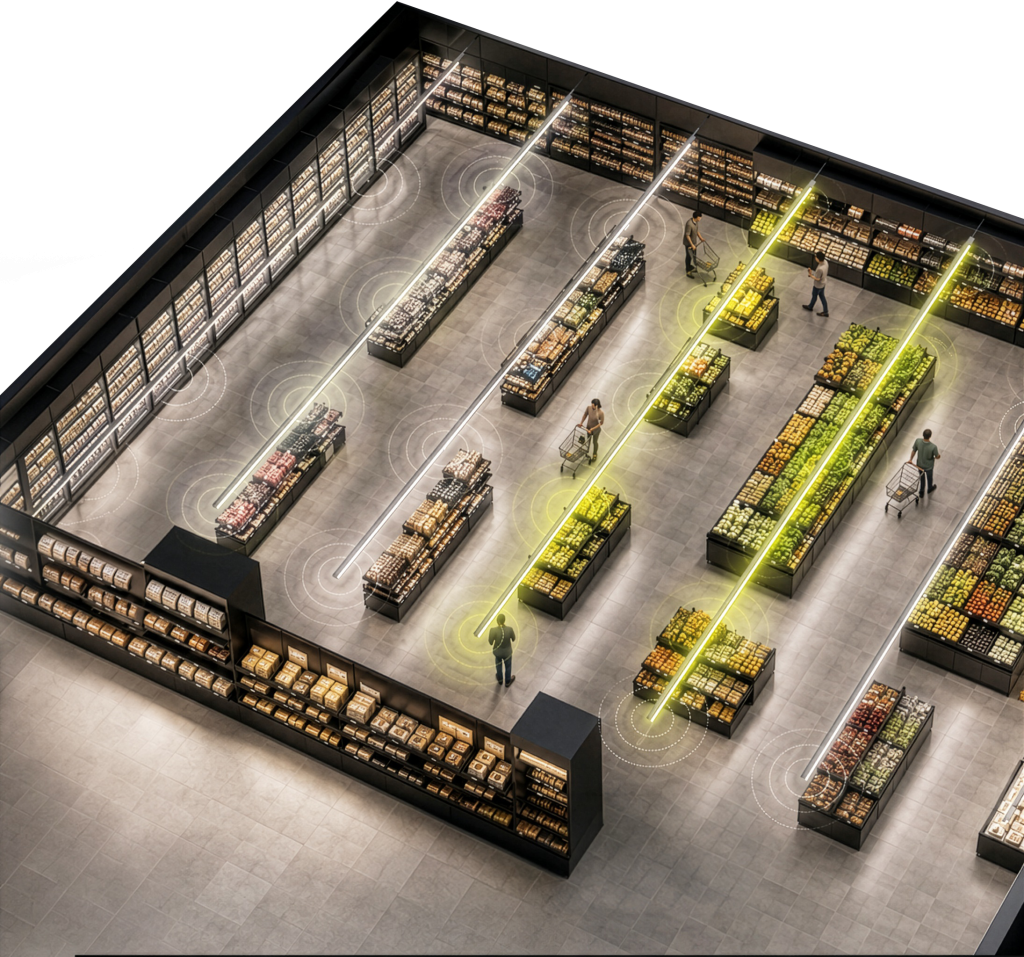
CONNECT is based on a wireless architecture in which each device can operate independently.
Thanks to an integrated sensor, each luminaire analyses activity in its immediate environment in real time. When presence is detected, the lighting level can increase. When no activity is detected, it can automatically be reduced.
The system is based on three main principles:
-
-
-
-
-
-
- local activity detection;
-
-
-
-
-
- automatic adjustment of lighting levels;
- individual device management.
This distributed intelligence allows lighting to be adapted more precisely to the actual use of the building, without requiring continuous manual intervention.
Discover the CONNECT solution
What are the benefits of smart lighting?
The value of a solution such as CONNECT goes beyond simply automating the switching on and off of luminaires.
Reduce energy consumption with smart lighting
Automatic adjustment of lighting levels helps limit energy consumption when full output is not required.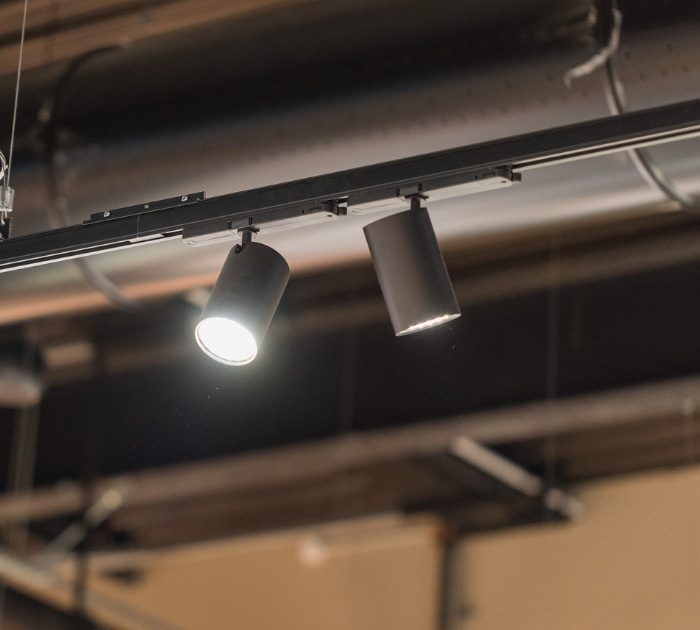
Rather than lighting an entire building uniformly throughout its operating period, CONNECT adjusts light according to the activity actually observed in each area.
Maintain visual comfort
Reducing energy consumption does not necessarily mean reducing comfort.
Lighting levels can be configured to maintain illumination suited to users’ needs at different times of the day.
Adapt lighting to different uses
CONNECT makes it possible to define different operating scenarios according to the activity of the building.
Preparation before opening, occupied operation, optimised mode or night mode: lighting levels associated with presence and absence can be configured for each scenario.
Adapt the installation as needs evolve
CONNECT’s wireless architecture also makes it easier to adapt the system as the needs of the site evolve.
Operating parameters can be adjusted over time to modify scenarios, lighting levels or the behaviour of individual luminaires according to the way the building is used.
This flexibility allows the installation to evolve without having to redesign its entire architecture.
How can lighting be integrated into a Building Management System?
Lighting can also become part of the building’s overall management system.
A BMS, or Building Management System, is used to centrally monitor and control various technical systems within a building, such as lighting, heating, ventilation and air conditioning.
The aim is to bring information and controls together within a single environment in order to monitor the building’s operation and energy consumption more effectively.
CONNECT can communicate with the BMS via a BACnet/IP gateway, an open protocol that allows different building systems to exchange information.
Lighting can then be integrated into the overall supervision of the site in order to:
- monitor and control the installation;
- programme or activate scenarios remotely;
- monitor energy consumption and performance;
- receive information or alerts relating to equipment operation.
This makes lighting a fully connected part of the building, alongside other technical systems.
CONNECT is designed as a Smart Building Ready solution and is compatible with the requirements of the French BACS Decree.
In which environments can smart lighting be used?
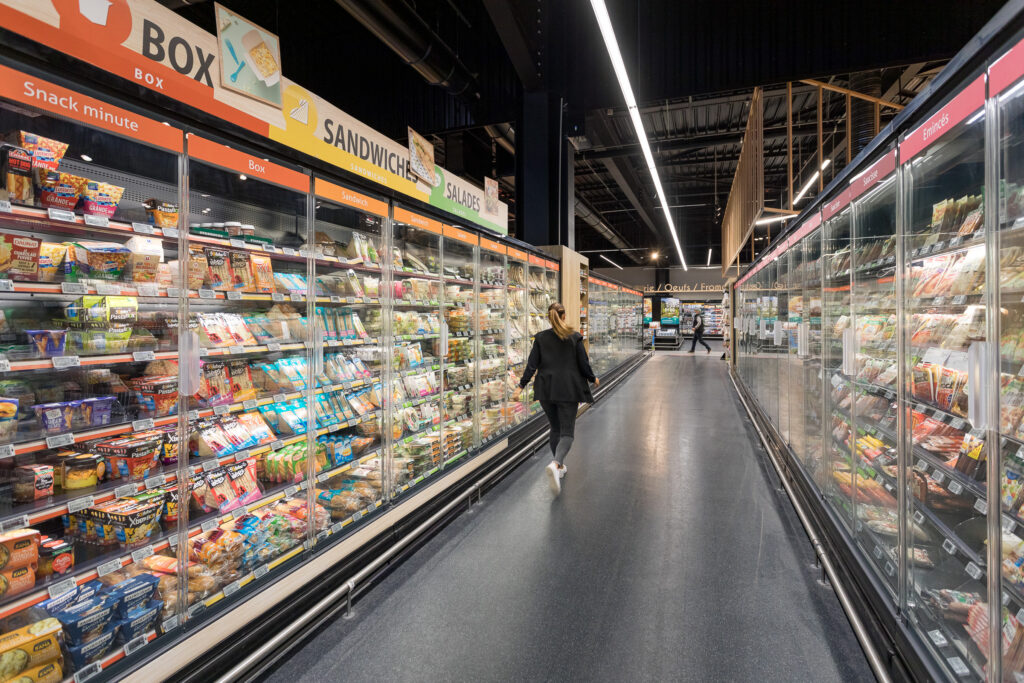
This is particularly the case in supermarkets and hypermarkets, retail environments, commercial buildings, offices and warehouses, where lighting requirements may change depending on occupancy and use.
In these environments, the objective is to adapt the operation of the lighting to each situation while maintaining the required lighting performance.
Smart lighting does not replace the fundamentals of a well-designed lighting project: luminous flux, colour temperature, colour rendering, optics and visual comfort all remain essential. CONNECT complements these choices by allowing the installation to adapt its operation to actual building use.
How to choose the right luminaire?CONNECT : a solution designed to make lighting evolve with the building
With CONNECT, TRATO offers a smart lighting solution capable of automatically adapting lighting to building activity while also allowing integration with the overall building management system.
Local detection, automatic dimming, configurable scenarios, wireless operation and BMS connectivity make it possible to control the installation more precisely and adapt it as requirements evolve.
The principle is simple: provide light when it is needed, at the level that is actually required.
Discover the CONNECT solution