

Articles similaires

Choosing a professional luminaire is not simply a matter of comparing wattage or lumen output.
Depending on how a space is used, several criteria need to be considered: luminous flux, colour temperature, colour rendering, luminous efficacy, optics and visual comfort.
In a retail store, office or public space, these characteristics directly influence how the environment is perceived, user comfort and the overall performance of the lighting installation.
At TRATO, choosing the right luminaire therefore means finding the right balance between technical performance and the actual use of the space.
What is the luminous flux of a luminaire?
Luminous flux, expressed in lumens (lm), represents the total amount of light emitted by a light source or luminaire.
The higher the luminous flux, the more light the luminaire is capable of producing. However, a higher lumen output does not necessarily mean a better lighting solution.
The required light level depends on several factors:
- the area to be lit
- the installation height
- the intended use of the space
- the positioning of the luminaires
- the chosen light distribution
A circulation area, retail zone, checkout area or office will not have the same lighting requirements.
TRATO advice
Luminous flux should always be considered in relation to the characteristics of the project. Its specification depends in particular on the area to be lit, the installation height, the intended use of the space and the required light distribution. A lighting study makes it possible to determine the appropriate luminous flux and accurately size the installation.
3000K or 4000K: which colour temperature should you choose?
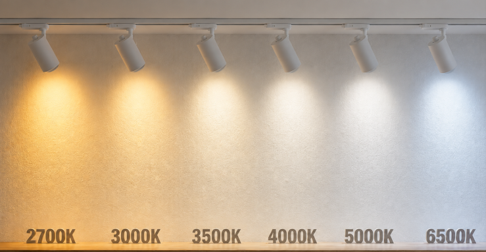
Colour temperature, expressed in kelvins (K), describes the appearance of white light.
In professional lighting, two colour temperatures are particularly common:
- 3000K: a warmer light, often associated with a welcoming and comfortable atmosphere
- 4000K: a more neutral light, often suited to environments where a brighter, more dynamic feel is required
The choice depends primarily on the atmosphere you want to create and how the space is used.
In retail, for example, colour temperature contributes directly to the identity of the store and to the way products are perceived.
There is therefore no single ideal colour temperature: it should be chosen according to the environment, materials, products on display and the desired customer experience.
What is CRI and which rating should you choose?
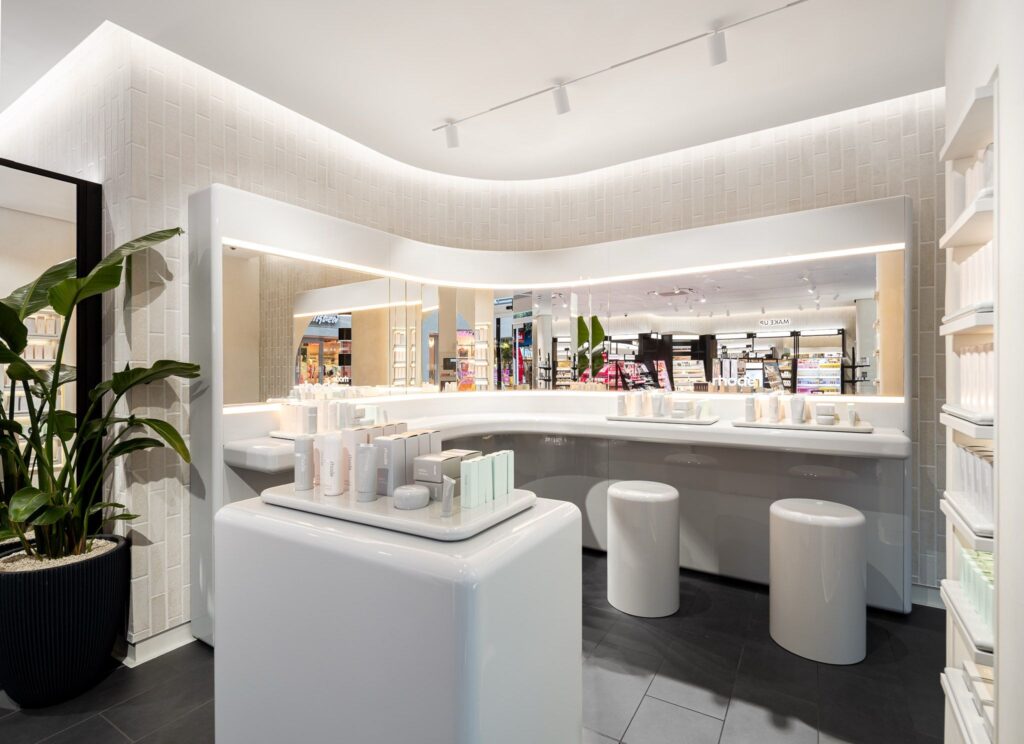
The Colour Rendering Index, or CRI, measures how accurately a light source reproduces colours.
The higher the CRI, the more natural and faithful colours appear.
A high CRI can be particularly important in environments such as fashion stores, food retail, cosmetics areas or showrooms, where accurate colour perception plays a key role.
In these spaces, lighting does more than simply make products visible: it also contributes to how they are presented and perceived.
CRI 80 or CRI 90: what is the difference?
A CRI of 80 is suitable for many everyday applications where the main objective is to provide efficient and comfortable lighting.
A CRI of 90 offers more accurate colour rendering and may therefore be preferred when colour perception is especially important, for example in fashion, cosmetics or premium retail environments.
The aim is not necessarily to select the highest CRI available, but to choose the rating best suited to the application, the products being displayed and the requirements of the project.
TRATO ranges are available with different CRI levels to meet these different needs.
What is luminous efficacy in lm/W?
Luminous efficacy, expressed in lumens per watt (lm/W), indicates how much light is produced in relation to the energy consumed.
The higher the value, the more energy-efficient the luminaire is.
This is particularly important in commercial and professional buildings, where lighting can represent a significant share of overall energy consumption.
However, luminous efficacy should not be considered in isolation.
A luminaire with a very high lm/W rating may still be unsuitable if it has:
- insufficient colour rendering
- an optic that does not match the application
- poor visual comfort
- a light distribution that is not suited to the space
Key takeaway
The best luminaire is not necessarily the one with the highest lm/W value, but the one that provides the best balance between energy performance, quality of light and intended use.
How do you choose the right optic for a luminaire?
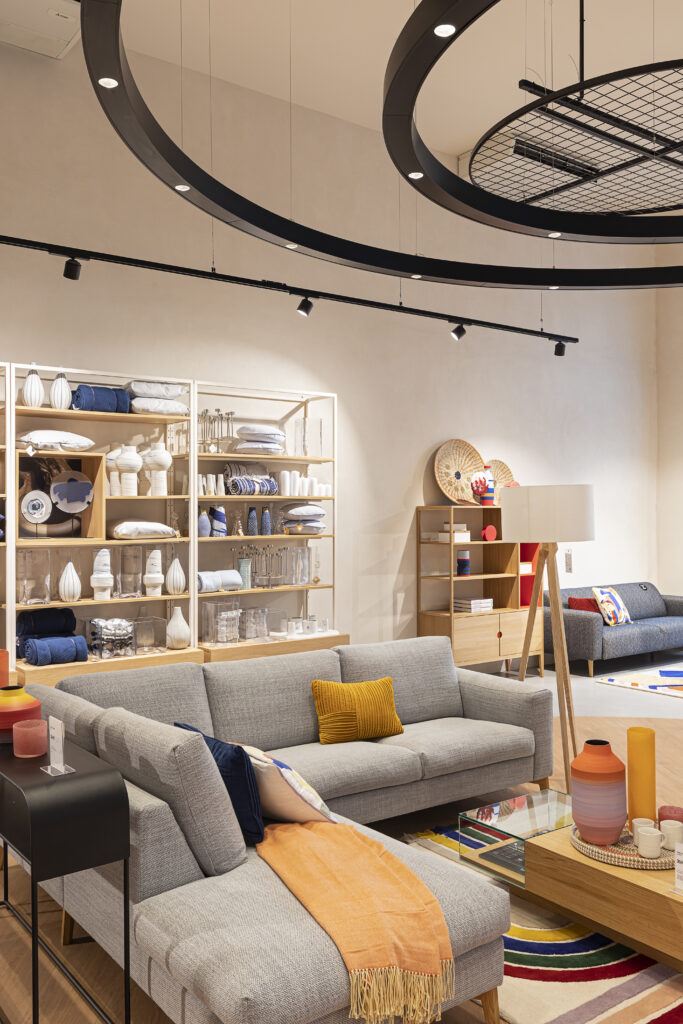
The quality of a lighting installation depends to a large extent on how light is distributed throughout the space.
The optic is the component used to control this light distribution. Depending on its design, it can focus light on a specific area, spread it more widely, direct it towards shelving or create uniform lighting across a large surface.
In a store, for example, general lighting and accent lighting do not serve the same purpose. A track-mounted spotlight can be used to highlight a specific area or product, while a continuous lighting system is generally better suited to providing uniform illumination across larger spaces.
The choice of optic should therefore be adapted to the intended use, installation height, luminaire layout and the desired lighting effect.
Combining different light distributions makes it possible to create a coherent lighting atmosphere tailored to each space.
What is UGR and how can glare be reduced?
UGR, or Unified Glare Rating, is an indicator used to assess the risk of discomfort glare caused by a lighting installation. The lower the UGR value, the lower the risk of glare.
However, UGR depends on several factors, including the luminaire itself, its position, light intensity, room dimensions and the observer’s position. It should therefore not be considered as an isolated product characteristic.
To reduce glare, several parameters need to be considered from the design stage. Choosing the right optic, positioning luminaires correctly, controlling luminance levels and adapting luminous flux to the use of the space all play an important role. Excessive contrasts should also be avoided, as they can create visual discomfort.
In offices, retail environments and spaces occupied for long periods of time, these choices contribute directly to user comfort.
What other criteria should be considered when choosing a luminaire?
Choosing a luminaire also means considering its long-term performance.
The service life of LED modules, maintenance options, repairability and lighting control systems can all have a significant impact on the total cost of the installation. Considering these aspects from the design stage can help make maintenance easier and extend the useful life of the equipment.
As part of a renovation project, this approach can also involve upgrading existing luminaires rather than replacing them completely. This is the principle behind LED retrofit, which consists of retaining components that are still functional and replacing only those that have become obsolete.
Discover TRATO LED retrofitLighting control is another important factor. A controlled lighting system can automatically adapt its operation according to occupancy, daylight levels, opening hours or the specific requirements of a particular area.
These solutions can help reduce energy consumption while adjusting lighting to actual usage.
TRATO also offers the CONNECT solution, designed for intelligent lighting control and optimisation according to the needs of each space.
Discover the CONNECT solutionHow do you choose the right luminaire for your project?
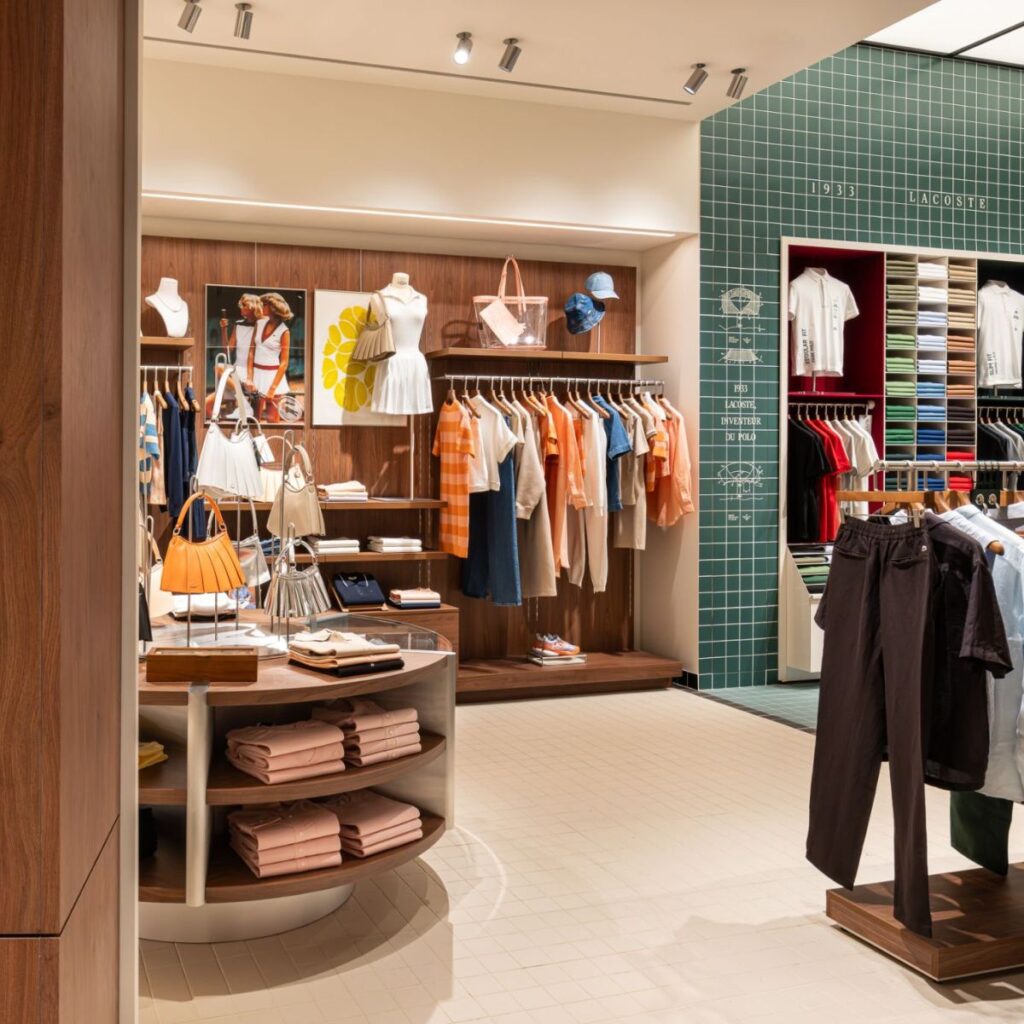
There is no single luminaire capable of meeting every requirement.
The choice depends on a number of criteria:
- how the space is used
- the required illuminance level
- the installation height
- the colour temperature
- the CRI level
- the optic
- energy efficiency
- visual comfort
- maintenance and control options
At TRATO, these different factors are considered together in order to provide a solution suited to the constraints and objectives of each project.
Our teams can support lighting designers, architects, installers and retailers in selecting luminaires and defining the most appropriate layout.
A lighting project should be considered as a whole
Luminous flux, colour temperature, CRI and luminous efficacy are all useful indicators when comparing luminaires.
But none of them should be considered in isolation.
The quality of a lighting project depends above all on combining the right technical characteristics with the right application.
This overall approach makes it possible to design lighting that is efficient, comfortable, durable and suited to the identity of each space.
Discover TRATO lighting solutions